Input, DC bus, inverter and output were checked at a 1.35 kW bench point
Notice: This site is not affiliated with, endorsed by, or sponsored by the manufacturer. Product names and trademarks are the property of their respective owners.
The SU3000LCD2UHV is a 3 kVA online UPS; zero output can originate before, within or after the inverter stage. Equipment record: Eaton Tripp Lite Series SU3000LCD2UHV, companion identifier BP72V18-2US. Decision: Diagnose the SU3000LCD2UHV in electrical stages and condemn the inverter only after input, charger, battery bus and output-path evidence exclude the other causes of no output.
Follow energy through four stages
A no-output complaint is a symptom, not a failed-part identification. The diagnostic record follows energy from AC input to rectifier, DC bus, inverter, static bypass and output distribution. Battery condition is checked before low DC is allowed to implicate the inverter.
For Eaton Tripp Lite Series SU3000LCD2UHV, the applicability boundary is anchored to 3000 VA, 2700 W and part BP72V18-2US. The 2 worked inputs remain assumptions until they are recorded at the equipment.
Use Tripp Lite service in Canada to arrange service for Eaton Tripp Lite Series SU3000LCD2UHV; confirm the complete equipment label before booking.

Figure 1. Eaton Tripp Lite Series SU3000LCD2UHV equipment and power path
Three kVA, 208 V and a worked load
The controlling numerical record is: UPS rating: 3000 VA; Worked model real-power class: 2700 W; Worked input and output class: 208 V; Controlled bench load: 1350 W; Reported no-output state: 0 V output symptom; Input, DC, inverter and output: 4 diagnostic stages. Each value has a defined source or assumption status in the engineering ledger. Values from different configurations are not combined as though they came from one installed system.
| Engineering parameter | Value | Evidence status |
|---|---|---|
| UPS rating | 3000 VA | Published OEM value |
| Worked model real-power class | 2700 W | Published OEM value |
| Worked input and output class | 208 V | Published OEM value |
| Controlled bench load | 1350 W | Worked design assumption |
| Reported no-output state | 0 V output symptom | Worked design assumption |
| Input, DC, inverter and output | 4 diagnostic stages | Published OEM value |
The 1,350 W bench point is 50 percent of the worked 2,700 W real-power class. Zero volts at the receptacle becomes meaningful only with simultaneous input, DC-bus, inverter command, bypass and breaker evidence.
A 50 percent bench point
The worked check uses bench load fraction = 1,350 W / 2,700 W. With a 1,350 W controlled load and 2,700 W power class, the result is 50% load. The load is applied only after stable no-load output and safe DC conditions are confirmed. The arithmetic is reproducible, but it remains a design check until the listed inputs are confirmed at the equipment.
The 50% load result follows from bench load fraction = 1,350 W / 2,700 W. If the 1350 W input changes, this check is repeated rather than carrying the earlier result into a different operating state.
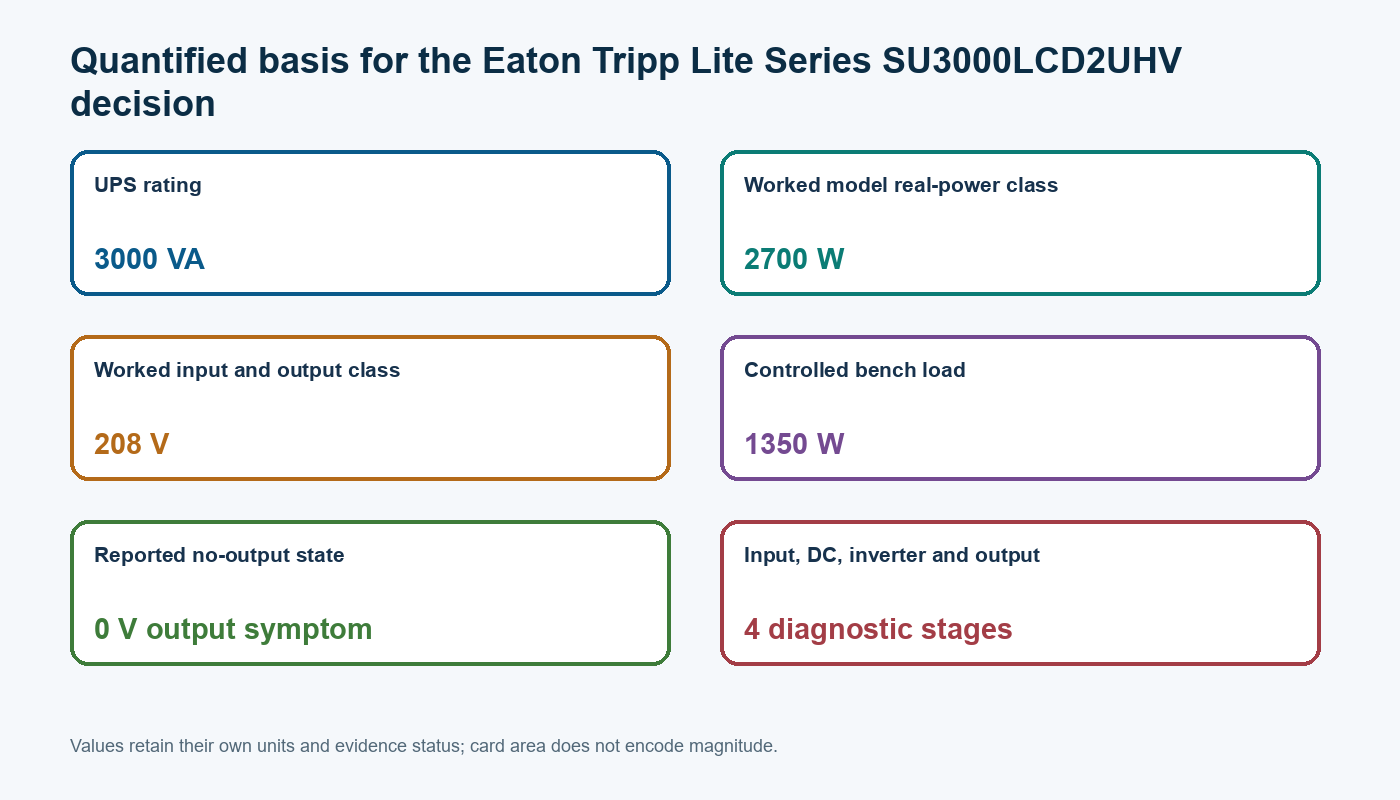
Figure 2. Quantified basis for the Eaton Tripp Lite Series SU3000LCD2UHV decision
Rectifier, battery, inverter or output
De-energized inspection checks connectors, fuses, battery condition, shipping damage and output protection. Energized checks then confirm input acceptance, charger operation and DC-bus stability before the inverter is commanded.
If the inverter produces voltage internally but not at the receptacle, the output relay, breaker, distribution or connection becomes the next branch. Bypass behaviour is recorded without using bypass as proof that the inverter is healthy.
| Path | Technical consequence | Disposition |
|---|---|---|
| Apply the stated engineering decision | Diagnose the SU3000LCD2UHV in electrical stages and condemn the inverter only after input, charger, battery bus and output-path evidence exclude the other causes of no output. | Selected basis |
| Generic model substitution | Select by family name or rating alone, without confirming the exact configuration. | Not selected on the stated evidence |
| Unverified operating assumption | Treat a design assumption as though it were a site measurement. | Reconsider only if the input changes |
Tripp Lite UPS service across Canada covers field measurements and service work for Eaton Tripp Lite Series SU3000LCD2UHV.
Confirm availability and catalogue details for Eaton Tripp Lite Series SU3000LCD2UHV or BP72V18-2US on the SU3000LCD2UHV product record page.
The Eaton Tripp Lite Series SU3000LCD2UHV decision retains part BP72V18-2US, the 50% load calculation result and the manufacturer-published 3000 VA point in one equipment record. Applicable OEM instructions, qualified electrical authority and the installed single-line or wiring record remain controlling for any executable work.
Loaded output and transfer checks
Acceptance of Eaton Tripp Lite Series SU3000LCD2UHV depends on five recorded checks:
- Confirm SU3000LCD2UHV suffix, voltage class and any BP72V18-2US external battery pack.
- Inspect battery, fuses, connectors and output protection before energizing.
- Record AC input, charger and DC-bus values.
- Verify no-load inverter and bypass output before applying 1,350 W.
- Observe loaded output, alarms, transfer and return to line.
The Eaton Tripp Lite Series SU3000LCD2UHV record is not accepted if part BP72V18-2US does not match, the calculation does not reproduce 50% load, or the final operating state is not recorded. The equipment returns to the approved safe state when a check stops, and the unresolved condition remains open without an invented repair result.
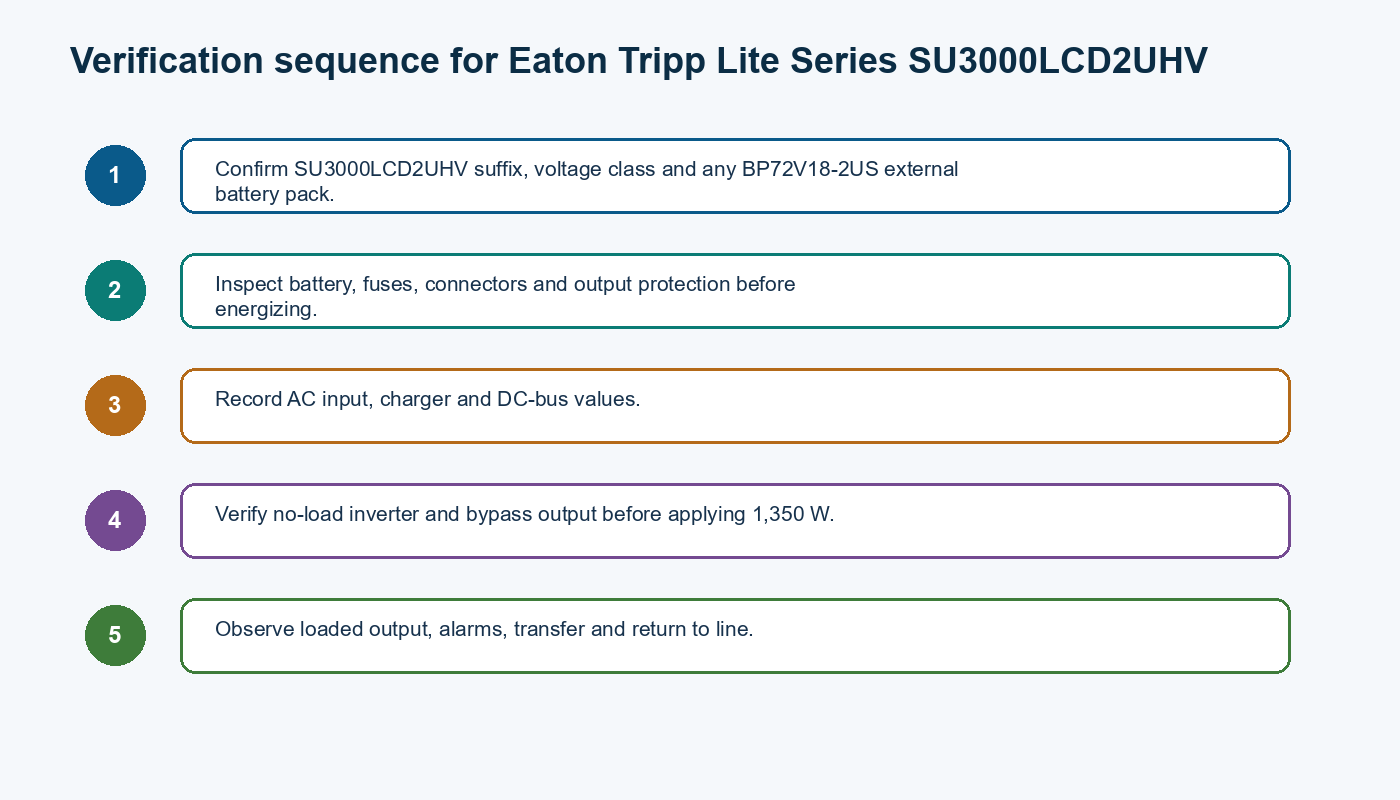
Figure 3. Verification sequence for Eaton Tripp Lite Series SU3000LCD2UHV
The failed stage must be demonstrated
A 50 percent load pass supports the tested output stage. A no-output root cause is accepted only when the upstream and downstream measurements locate the failed stage.
Decision rule: Diagnose the SU3000LCD2UHV in electrical stages and condemn the inverter only after input, charger, battery bus and output-path evidence exclude the other causes of no output. A different model, load, voltage, battery string, software version or operating state requires a new check against the applicable manufacturer record.
Sources
- Eaton Tripp Lite SU3000LCD2UHV product specification
- Eaton Tripp Lite SU3000LCD2UHV battery compatibility record
- Internal engineering reference: UPS Solutions & Quotes/UPS Diagnostics and Troubleshooting.md
- our service network, anonymized field-case library, used only where the text identifies a retained field fact.